The Weakest Link: Recovery after cardiac arrest

Every year in the UK, there are approximately 40,000 out-of-hospital cardiac arrests (OHCAs) where cardiopulmonary resuscitation (CPR) is attempted.1 Whilst life-saving interventions, such as bystander CPR rates have improved, post-cardiac arrest recovery remains inconsistent. Survivors and their key supporters, including family members, partners or friends who may also be known as co-survivors, continue to face physical, cognitive, emotional, and social challenges. There are currently significant gaps and inconsistencies in the care and rehabilitation offered to survivors after discharge, with many people not receiving the support they need to fully recover.

These gaps carry significant economic costs that could be mitigated through equitable, well-resourced, and patient-centred support pathways.

The Survivor Quality Standard (QS), published by Resuscitation Council UK (RCUK) in 2024, directly addresses these pressures by providing clear standards for assessment, rehabilitation, and follow-up care from hospital discharge through to long-term recovery.2 Developed by RCUK in collaboration with clinical experts and patient representatives, these standards set out best practice for supporting cardiac arrest survivors and their families.

Through personal stories and evidence-based hospital case studies, this report demonstrates why it is vital for every cardiac arrest survivor and co-survivor to receive personalised, evidence-informed support without delay. Embedding the QS into national strategies, will improve outcomes, reduce disparities, and build resilient communities through multidisciplinary aftercare, peer support, and rapid intervention, as highlighted by survivor stories. 

Key recommendations at a glance:

  • Prioritise survivor insights and experiences in service design and evaluation.
  • Embed the RCUK’s Survivor QS into national cardiac arrest strategies across the UK.
  • Ensure access to holistic aftercare addressing physical, psychological, cognitive and social needs.
  • Provide dedicated funding for recovery programmes across the four nations.
  • Establish multi-disciplinary follow-up clinics and support the continued development of peer support networks.
  • Be innovative in linking into, and building upon, existing rehabilitation services.

Implementing these changes will improve quality of life for survivors, reduce the burden on health and care systems, and align with national guidelines from RCUK, which emphasise post-resuscitation care to enhance long-term outcomes.3 These changes align with national healthcare priorities across the UK to focus on community-based care and prevention through dedicated recovery programmes and proactive survivor support. 

Definitions:

  • Survivor: An individual resuscitated from cardiac arrest, without a persisting disorder of consciousness or neurological pathways, living at home.
  • Key Supporter (co-survivor): Family, partners, or friends impacted by the event.
  • Scope: Covers recovery from pre-discharge to long-term follow-up, for in-hospital and out-of-hospital cardiac arrests, excluding the treatment of underlying causes.

1 Resuscitation Council UK. Epidemiology of cardiac arrest Guidelines, 2025, https://www.resus.org.uk/professional-library/2025-resuscitation-guidelines/epidemiology-cardiac-arrest-guidelines.

2 Resuscitation Council UK. Quality Standards: Survivors, 2024, https://www.resus.org.uk/library/quality-standards-cpr/quality-standards-survivors.

3 Resuscitation Council UK, Post-resuscitation care Guidelines, 2025, https://www.resus.org.uk/professional-library/2025-resuscitation-guidelines/post-resuscitation-care-guidelines.

1.1 Background to cardiac arrest survival and recovery

Despite advances in emergency response and wider public awareness of CPR, survival rates remain significantly below international examples of best practice, with fewer than one in ten people surviving to hospital discharge.4 Outcomes also vary significantly depending on a range of factors such as delays in recognising cardiac arrest (for example, if a person collapses when no one is around), and the time taken to commence chest compressions and use an automated external defibrillator (AED).

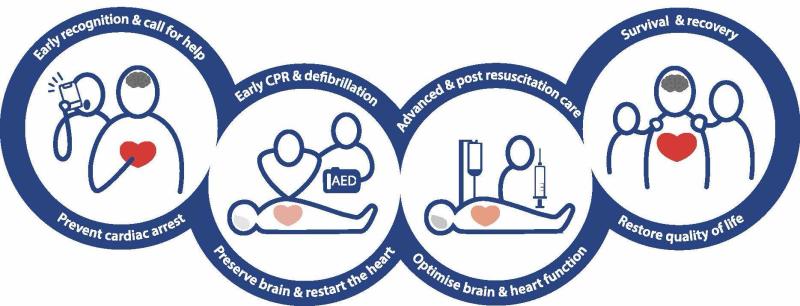
Survival depends on the “chain of survival”: early recognition and call for help (to prevent cardiac arrest), early CPR and defibrillation (to preserve the brain and restart the heart), advanced and post-resuscitation care (to optimise brain and heart function), and survival and recovery (to restore quality of life). However, recovery extends far beyond resuscitation. Survivors often face cognitive impairment (50%),5 physical limitations (40%),6 fatigue (29%),7 and emotional issues (15-30%).8 Key supporters may experience anxiety, depression, post-traumatic stress disorder (PTSD), and caregiver burden, with studies showing up to 25% of key supporters reporting long-term psychological distress.9 The variation among survivors, from those with minimal impairments to those requiring significant rehabilitation support, emphasises the need for personalised care pathways. 

Image
chain of survival shows four links: early recognition and call for help, early CPR and defibrillation, advanced and post resuscitation care, survival and recovery.

4 Clinical Trials Unit, "Out-of-Hospital Cardiac Arrest Overview: English Ambulance Services 2024," University of Warwick, 2024, https://warwick.ac.uk/fac/sci/med/research/ctu/trials/ohcao/publications/epidemiologyreports/.

5 Pauline van Gils, Caroline van Heugten, Jeannette Hofmeijer, Hanneke Keijzer, Sjoukje Nutma, and Annelien Duits, “The Montreal Cognitive Assessment Is a Valid Cognitive Screening Tool for Cardiac Arrest Survivors,” Resuscitation 176 (2022): 90–97, https://doi.org/10.1016/j.resuscitation.2022.03.015.

6 M.K. Wagner, J. Christensen, K.A. Christensen, C. Dichman, R. Gottlieb, I. Kolster, C.M. Hansen, H. Hoff, C. Hassager, F. Folke, B.G. Winkel, A multidisciplinary guideline-based approach to improving the sudden cardiac arrest care pathway: The Copenhagen framework. Resusc Plus. 2023 Dec 30;17:100546. doi: 10.1016/j.resplu.2023.100546. PMID: 38260118; PMCID: PMC10801323.

7 V. L. Joshi, L. H. Tang, T. B. Mikkelsen, J. F. Nielsen, L. Zinckernagel, B. Borregaard, S. Agarwal, A. K. Ersbøll, H. Yonis, K. Kragholm, and C. Hassager, “Does Time Heal Fatigue, Psychological, Cognitive and Disability Problems in People Who Experience an Out-of-Hospital Cardiac Arrest? Results from the DANCAS Survey Study,” Resuscitation 182 (2022): 109639, https://doi.org/10.1016/j.resuscitation.2022.11.005.

8 Ibid

9 K. N. Sawyer, T. R. Camp-Rogers, P. Kotini-Shah, M. Del Rios, M. Gossip, V. K. Moitra, K. L. Haywood, C. M. Dougherty, S. A. Lubitz, A. A. Rabinstein, J. C. Rittenberger, C. W. Callaway, B. S. Abella, R. G. Geocadin, M. C. Kurz, and American Heart Association Emergency Cardiovascular Care Committee; Council on Cardiovascular and Stroke Nursing; Council on Genomic and Precision Medicine; Council on Quality of Care and Outcomes Research; and Stroke Council, “Sudden Cardiac Arrest Survivorship: A Scientific Statement from the American Heart Association,” Circulation 141, no. 12 (2020): e654–e685, https://doi.org/10.1161/CIR.0000000000000747.

2.1 Survivor journeys

Survivors’ journeys are diverse, ranging from those with minimal impairments to those requiring lifelong care. Many return home but struggle with hidden disabilities. Lived experiences reveal common themes: initial relief gives way to frustration with unmet needs. 

Case study: MacLean MacLeod (Forres, Moray)

Cardiac arrest

MacLean MacLeod, a fit member of the Findhorn Coastal Rowing Club, experienced an OHCA on 21 April 2022, after a high-intensity training row. Thanks to the swift actions of his teammates, who recognised the arrest immediately, performed CPR, and used a nearby defibrillator, MacLean’s life was saved. MacLean spent nearly three weeks in hospital, where he received excellent acute care, including the fitting of three stents.

Problem after cardiac arrest

Once discharged home, MacLean and his wife found it difficult to navigate recovery without clear guidance or follow-up. Despite repeated attempts to secure appointments, there was no structured pathway. “I felt abandoned, like I was left to figure out recovery alone,” he recalled.

Progress only came after contacting his local MSPs in early 2023. MacLean’s experience highlights how even when emergency and hospital care are exemplary, the absence of a clear, coordinated pathway after discharge can leave survivors and families feeling isolated and unsupported. Support from Keiran’s Legacy, RCUK, and Sudden Cardiac Arrest UK (SCAUK) provided vital peer connection and information, emphasising the importance of embedding recovery and aftercare within a national quality standard.

Case study: Ruth Harvey (Taunton, Somerset)

Cardiac arrest

Ruth Harvey, 55, experienced an OHCA on 11 July 2021, while walking in Salisbury. Thanks to her partner providing CPR and a rapid ambulance response, she survived. After around 25 minutes, paramedics detected a faint pulse, though Ruth remained unconscious for several days.

Problem after cardiac arrest

Following three days in intensive care, Ruth awoke with memory loss and delirium. Ruth was discharged after three weeks with no cardiac issues identified, but she faced severe fatigue, neurological symptoms, and PTSD “I was lost, struggling to remember simple things, and the fear of it happening again was crippling,” she said. 

Ruth learned pacing strategies, such as breaking tasks into 15-minute intervals, through self-referred neurology support. Her partner, Simon, faced ongoing anxiety from performing CPR, with no professional support. SCAUK and Headway ultimately provided vital support for both Ruth and her partner, but their intervention also highlights the absence of coordinated clinical care for cardiac arrest survivors and key supporters.

Case study: Alan Owen (Llanddarog, Carmarthen)

Cardiac arrest

Alan Owen, an IT consultant, experienced an OHCA on 3 April 2022, during a walking football match. Revived after CPR and three shocks from a defibrillator, he was diagnosed with hypertrophic cardiomyopathy and fitted with an implantable cardioverter defibrillator (ICD). His son, who witnessed the event, developed anxiety. “Every day I worried about the ICD shocking me again, it was a shadow over my life,” Alan shared.

Problem after cardiac arrest

Despite excellent in-hospital care, he lacked mental health support, still awaiting an appointment one year after referral in 2023. 

Peer support from Cardiomyopathy UK and Wales Air Ambulance’s aftercare service helped him reframe fears and return to work. Alan’s experience emphasises the need for ongoing psychological support for survivors and key supporters, highlighting gaps in care pathways that the QS could address.

Case Study: Siobhan Wren (Wisconsin, US/Manchester, UK) (Key supporter: Josephine Wren)

Cardiac arrest

Siobhan Wren, a healthy 20-year-old studying abroad in the US, experienced an OHCA while shopping with friends in Wisconsin. CPR was started by a police officer without access to a defibrillator, and after resuscitation, she was placed in a coma. Her parents travelled from the UK and were faced with limited communication and little emotional support.

Problem after cardiac arrest

Although Siobhan survived and received an implantable cardioverter defibrillator (ICD), the family left hospital with minimal understanding of her condition, and on returning home, she experienced further shocks, unclear follow-up, and no guidance on lifestyle, risk, or psychological impact. A later collapse in Manchester led to a month-long admission, during which her mother and key supporter, Josephine Wren, again struggled to navigate support as the parent of a young adult. 

Positive interactions — including follow-up contact from the police officer and first responders, clear written explanations to help Siobhan understand her condition, a supportive consultant, and peer networks such as SCAUK — provided crucial reassurance. Josephine reflected that consistent pathways, better communication, age-appropriate guidance, and support for key supporters would have significantly improved recovery.

2.2 Challenges and inequalities in cardiac arrest recovery

Despite improvements in life-saving interventions such as bystander CPR, post-cardiac arrest recovery remains inconsistent. Survivors and their key supporters, including family members, partners, friends, or anyone who witnesses or responds to the event, face a wide range of long-term and interrelated challenges.

Clinical challenges

  • Ongoing cardiac issues, fatigue, reduced stamina, and mobility problems are common following cardiac arrest.
  • Physical impacts are often long-term and poorly supported beyond hospital discharge.
  • Access to specialist follow-up care and rehabilitation varies significantly by location and service availability.

Cognitive challenges

  • Many survivors experience cognitive impairment, including memory loss, reduced concentration, slower information processing, and difficulties with planning and decision-making.
  • These impairments can significantly affect independence, confidence, and the ability to return to work or education.
  • Access to cognitive assessment and rehabilitation remains inconsistent and is often limited.

Psychological challenges

  • Anxiety, depression, and post-traumatic stress disorder (PTSD) affect an estimated 15–30% of survivors.
  • Psychological distress may be exacerbated by the traumatic nature of the cardiac arrest and uncertainty around recovery.
  • Temporary loss of a driving licence, which for many becomes permanent, can further impact independence and emotional wellbeing.
  • Key supporters may also experience anxiety, distress, and fear of recurrence, with limited access to tailored psychological support.

Social challenges

  • Returning to work, driving, and maintaining relationships can be difficult for many survivors.
  • Around 40% report ongoing physical limitations that affect daily life.
  • Cognitive and psychological challenges can further hinder social reintegration and participation.
  • Key supporters often face disruptions to employment, caring responsibilities, and family dynamics.

Economic challenges

  • Survivors may experience reduced earning capacity, prolonged time off work, or early retirement.
  • Families may face additional costs related to care, travel, or rehabilitation.
  • Financial pressures are often more severe in already deprived households, reinforcing existing inequalities.

Inequalities across the cardiac arrest care pathway

  • Inequalities persist across the entire cardiac arrest care pathway, from emergency response to post-discharge recovery and rehabilitation.
  • Emergency response refers to the immediate recognition of cardiac arrest, calling emergency services, delivery of bystander CPR, and access to early defibrillation.
  • Evidence from Europe shows ethnic and socioeconomic disparities in resuscitation outcomes, with minority ethnic groups and deprived communities experiencing lower survival rates due to delayed bystander intervention and reduced access to AEDs.10,11 
  • Available data shows that South Asian individuals are underserved by cardiac rehabilitation services, with lower uptake and completion rates compared to White British individuals.12 RCUK’s Every Second Counts report highlights the need for a CPR-trained society to help address these inequalities.13 

2.3 Gaps in current care and support across the UK

While some regions offer specialist follow-up clinics and coordinated rehabilitation pathways, which have been shown to improve both physical and mental health outcomes, many survivors receive little or no structured support once discharged from hospital.

Inconsistent follow-up and rehabilitation

  • Access to post-cardiac arrest rehabilitation varies significantly across the UK, resulting in marked regional disparities in care.
  • Inequalities persist in access to rehabilitation, with evidence highlighting barriers such as poor communication between services and a lack of available resources.14
  • Many survivors do not receive routine follow-up, multidisciplinary assessment, or timely referral to appropriate rehabilitation services.

System and clinician barriers

  • Funding shortages limit the availability and sustainability of specialist clinics, rehabilitation programmes, and long-term support services.
  • Clinician barriers, including limited capacity and infrastructure, hinder consistent delivery of post-cardiac arrest care.
  • In particular, a lack of transport infrastructure to cardiac arrest centres presents a significant barrier for survivors requiring specialist follow-up15,16 

Fragmented pathways and data gaps

  • Poor coordination between acute care, community services, and primary care contributes to fragmented recovery pathways and inconsistent patient experiences.
  • The absence of comprehensive UK-wide data on post-cardiac arrest outcomes and service provision limits the ability to identify gaps, evaluate impact, and drive systematic improvement.

Consequences of unmet need

  • Gaps in post-cardiac arrest care reduce quality of life and increase the risk of long-term disability for survivors.17 
  • Inadequate rehabilitation and follow-up contribute to avoidable hospital readmissions and increased demand on health and social care services.18 
  • Significant economic costs that could be avoided through well-resourced, equitable and patient centred services. 
     

10 L. Horriar, N. Rott, and B. W. Böttiger, “Improving Survival after Cardiac Arrest in Europe: The Synergetic Effect of Rescue Chain Strategies,” Resuscitation Plus 17 (2023): 100533, https://doi.org/10.1016/j.resplu.2023.100533.

11 I. Uny, K. Angus, and F. Dobbie, “Barriers and Facilitators to Delivering Bystander Cardiopulmonary Resuscitation in Deprived Communities: A Systematic Review,” Perspectives in Public Health 143, no. 1 (2022): 43–53, https://doi.org/10.1177/17579139211055497.

12 J. McAllister, M. Harrison, C. A. Lawson, and S. J. Singh, “Ethnic Health Inequalities in Cardiac Rehabilitation: Driving High-Quality Data,” British Journal of Cardiac Nursing 19, no. 7 (2024), https://doi.org/10.12968/bjca.2024.0095.

13 Resuscitation Council UK, Every second counts: Tackling inequalities in resuscitation, 2024, https://www.resus.org.uk/every-second-counts.

14 J. Eddison, O. Millerchip, A. Rosenberg, A. Lewinsohn, and J. Raitt, “Clinicians’ Experience of Barriers and Facilitators to Care Delivery of an Extracorporeal Cardiopulmonary Resuscitation Service for Out-of-Hospital Cardiac Arrest: A Qualitative Survey,” Scandinavian Journal of Trauma, Resuscitation and Emergency Medicine 32 (2024): 86, https://doi.org/10.1186/s13049-024-01261-7

15 J. Eddison et al, “Clinicians’ Experience of Barriers and Facilitators to Care Delivery”, 2024.

16 S. Katzenschlager, A. Elshaer, B. Metelmann, C. Metelmann, K. Thilakasiri, V. Karageorgos, T. Barry, K. Alm-Kruse, H. Karim, H. Maurer, J. Kramer-Johansen, and S. Orlob, “Top 5 Barriers in Cardiac Arrest Research as Perceived by International Early Career Researchers — A Consensus Study,” Resuscitation Plus 18 (2024): 100608, https://doi.org/10.1016/j.resplu.2024.100608.

17 G. M. Pound, C. Grimwood, A. Rix, K. Wickham, D. Jones, G. M. Eastwood, and C. L. Hodgson, “Long‑term Functional Outcomes and Health‑Related Quality of Life Following In‑Hospital Cardiac Arrest (IHCA): A Systematic Review,” Resuscitation 214 (2025): 110673.

18 K. N. Sawyer et al., “Sudden Cardiac Arrest Survivorship: A Scientific Statement from the American Heart Association,” 2020.

Rather than introducing new or complex service models, the Quality Standard focuses on better coordination of existing services, multidisciplinary working, and timely follow-up. It is designed to be adaptable to local health systems and deliverable within current structures, while addressing the clinical, cognitive, psychological, social, and organisational needs of survivors and their key supporters.

The following case studies demonstrate how services aligned with the Survivor Quality Standard can be implemented in practice. They show the positive impact of structured, holistic follow-up for survivors and key supporters, as well as the practical barriers that currently limit wider adoption and sustainability.

3.1 Examples of QS adoption/best practice

In the UK, the Mid and South Essex NHS Foundation Trust CARE Service has demonstrated how specialised reviews can improve outcomes for survivors at six months.19 Building on this example of best practice, further pilots across England have explored different models of post-arrest follow-up care. The following case studies – from Norfolk and Norwich University Foundation Trust Hospital and Barts Heart Centre – demonstrate how Quality Standard-aligned services can be delivered in practice, the positive impact they have on survivors and key supporters, and the barriers that prevent their wider adoption.

Case study: Norfolk and Norwich University Foundation Trust Hospital 
Follow-Up Clinic

The Norfolk and Norwich University Foundation Trust Hospital, a primary percutaneous coronary intervention (PPCI) centre for East Anglia, ran a 17-month pilot follow-up clinic from August 2023 to December 2024, funded by NHS England and Improvement. The service aimed to deliver comprehensive, QS-aligned care. This included a cardiology specialist nurse and clinical specialist occupational therapist who conducted holistic reviews, addressing physical, cognitive (memory, attention, thinking or problem-solving ability), and emotional concerns, while separate discussions with family members assessed key supporters’ wellbeing.

Key impacts and next steps:

  • The clinic provided cardiac rehabilitation for all patients, including 
    non-ischaemic cases.
  • Collaboration with East of England Air Ambulance, primary care, and SCAUK ensured integrated care, with referrals to neurological, occupational, and peer support services, supporting phased work returns.
  • Despite success, funding and commissioning barriers from Integrated Care Boards, plus capacity, training, and resource constraints, led to discontinuation in December 2024.
  • To reinstate and scale such services, there is an urgent need for mandated post-cardiac arrest care within national health standards, supported by government funding, RCUK/British Heart Foundation advocacy, and enhanced primary care collaboration.

Case study: Barts Heart Centre OHCA Pathway

Barts Heart Centre (BHC), a specialised cardiovascular centre serving three million people across North and East London, West Essex, and beyond, established an OHCA Pathway in September 2022. Treating approximately 170 OHCA patients annually, the service takes a multi-disciplinary approach spanning intensive care, cardiology, neurology, psychology, occupational therapy, and neurorehabilitation. The pathway improves inpatient and post‑acute care coordination, responding to the 2021 NCEPOD report, which found that only 50% of OHCA cases received good‑quality care.

The service aligns with the Survivor QS by offering comprehensive assessments and support. Since November 2021, the occupational therapy team has assessed all OHCA patients, with referrals to specialist neurorehabilitation as needed. Psychological support extends to families, complemented by the ICU family liaison nurse, who plays a vital role in supporting key supporters. Annual OHCA family days, delivered with MDT and SCAUK input, further strengthen peer and professional support.

Neurological prognostication follows European Resuscitation Council and European Society of Intensive Care Medicine (ERC–ESICM) guidelines, with consultant neurologists providing expertise and access to specialist investigations. Weekly OHCA MDT meetings, running for over four years, have improved communication and care coordination.

Key impacts and next steps:

  • Two survivors (aged 35 and 50) with post-OHCA cognitive, motor, and behavioural issues received coordinated neurorehabilitation and social services support via MDT referrals. (These individuals were not part of the STEPCARE study, which began in August 2024.) These cases demonstrate the pathway’s ability to address complex needs and enhance recovery.
  • Challenges include resource constraints and time for assessments, despite enablers such as specialist leadership and funding. Aspirations include a clinical specialist OT role, research co-development with survivors, and a national post-cardiac arrest care pathway to reduce disparities in survivor care.

19 Mid and South Essex NHS Foundation Trust, Cardiac Rehabilitation Service, 2024, https://www.mse.nhs.uk/cardiac-rehabilitation-service/

4.1 England

In England, cardiac arrest policy is integrated into broader cardiovascular disease (CVD) frameworks, such as the NHSE 10 Year Health Plan, which prioritises prevention and aims to reduce premature deaths from CVD through enhanced community care and digital health innovations.20 The Restart a Heart campaign, led by RCUK in collaboration with partners across the UK, trains thousands in CPR supporting them to become ResusReady.21 The 2017 Resuscitation to Recovery framework outlines improvements in OHCA management, focusing on rapid response and advanced care.22 Yet, persistent challenges remain in ensuring consistent follow-up and rehabilitation for cardiac arrest survivors across England.

Recent initiatives include a UK-first rapid resuscitation protocol scheme launched in 2025, which has reduced response times in pilot areas by 15%. However, survival rates remain low, with only 9.5% of OHCA patients surviving to 30 days.23 

4.2 Scotland

Scotland’s OHCA Strategy (2021-2026) is a comprehensive plan to increase survival through community readiness and the “Chain of Survival”.24 Since 2015, Save a Life for Scotland (SALFS) has transformed Scotland’s approach to OHCA by embedding CPR awareness into communities and shifting public attitudes around intervention. Despite these advances, post-arrest care remains underdeveloped, with limited follow-up services for survivors and key supporters, particularly in rural areas where access to specialised clinics is scarce. Recognising this, in 2025, Save a Life for Scotland Recovery was formed as a subgroup of SALFS with a specific remit to address the implementation of the QS in Scotland, along with support for bystanders involved in OHCA. In parallel, Chest, Heart & Stroke Scotland, in partnership with the Scottish Ambulance Service and SALFS, has launched a pilot advice line providing structured emotional support for people who have witnessed or provided CPR, helping to address a longstanding gap in psychological aftercare for bystanders and key supporters.25 

Recently, the Chief Scientist Office (Scottish Government) funded research project ‘Development of a cardiac arrest aftercare intervention for survivors (CAROUSel)’ was launched. The project aims to develop an OHCA aftercare intervention that addresses survivors' unmet needs.

4.3 Wales

In 2017, the Welsh Government produced an Out-of-Hospital Cardiac Arrest Plan, which aimed to improve OHCA care by enhancing public CPR and defibrillation skills to make Wales a world leader in survival.26 Wales has introduced major changes in 2025 to ambulance response protocols, creating a ‘purple arrest category’ for cardiac and respiratory arrests to improve survival rates.27 Piloted from July 2025, these aim to prioritise life-threatening calls, and introduce measures aligned to the chain of survival in a new ‘purple arrest category’, specifically for OHCA calls.

Working with key stakeholders, Save a Life Cymru (SALC) has supported the development of a UK-wide resource to support those who have witnessed or performed CPR, or who are a cardiac arrest survivor or family member. This information is being embedded at key touch points, enabling recovery from a traumatic event to start without delay. Standardised, in-hospital, patient discharge information leaflets, endorsed by NHS Wales, have also been co-produced and include further support for those who have had a cardiac arrest and/or an implantable cardioverter defibrillator (ICD).

Having supported the development of RCUK’s Survivor QS, Wales now leads the way in adopting these through the development of the “Cardiac Arrest Survivor Quality Standards for Wales”. This will help bridge inequality gaps in this patient group and highlight where post-arrest care remains underdeveloped and where follow-up services for survivors and co-survivors are needed.

4.4 Northern Ireland

The Northern Ireland Ambulance Service (NIAS) continues to make significant progress in improving outcomes from OHCA. NIAS are striving to increase survival from OHCA by encompassing focus points right across the patient journey, including strengthening each link in the chain of survival, from early recognition and community readiness to early advanced care interventions. Prior to 2023, little work had been undertaken within NIAS to understand or quantify survival; however, since then, a considerable amount of work has taken place with the restructuring of the Community Resuscitation Team (CRT) to allow for more community CPR training to take place and to establish a more robust system of ‘emergency ready’ defibrillators. 

While the survival rate to hospital discharge remains under 10%, this has increased massively in recent years.

Despite this, it is widely recognised that post-arrest care is underdeveloped, with limited access to psychological and neurological support for survivors and 
co-survivors. These challenges are compounded by geographical health inequalities that continue to affect access to services across Northern Ireland.

UK-wide support resources

Across the UK, survivors and co-survivors can access practical guidance and support through RCUK’s post-cardiac arrest discharge resource.28 This UK-wide tool provides tailored information on recovery, rehabilitation, emotional wellbeing, and peer support. It signposts to RCUK’s support after cardiac arrest webpage helping to bridge gaps where local follow-up services may be limited. It has been endorsed by the Department of Health Northern Ireland, NHS England, NHS Scotland, and NHS Wales.

Other charities, including SCAUK and Sudden Arrhythmic Death UK (SADS UK), play a vital role in offering peer networks, educational materials, advocacy, provision of counselling and community engagement. Together, these organisations form an essential national support network that complements statutory health and care services.

In Scotland, additional support is also available through a new pilot advice line delivered by Chest, Heart & Stroke Scotland, in partnership with the Scottish Ambulance Service and SALFS, offering up to 12 weeks of free emotional support for people who have provided CPR or witnessed an OHCA. This helps address a previously unmet need for structured psychological support for bystanders and key supporters.

Ruth Cadbury MP: “This paper rightly highlights the urgent need for consistent, survivor-centred personalised care following cardiac arrest. Survival is only the first step — recovery must be supported through equitable, multi-disciplinary services that reflect the complex needs of survivors and their families. The powerful accounts and case studies in this paper make clear why the Survivor Quality Standard must be adopted, and I welcome it as a vital framework to improve outcomes and reduce resuscitation inequalities across the UK.”


20 NHS England, 10 Year Health Plan for England.

21 Resuscitation Council UK, ResusReady, 2024, https://www.resus.org.uk/about-us/get-involved/resusready.

22 NHS England, Resuscitation to Recovery: A National Framework to Improve Care of People with Out-of-Hospital Cardiac Arrest (OHCA) in England, 2017,5, https://www.england.nhs.uk/south/wp-content/uploads/sites/6/2016/12/resuscitation-to-recovery.pdf.

23 Clinical Trials Unit, “OHCA Overview: English Ambulance Services 2024.”

24 Scottish Government, Out of Hospital Cardiac Arrest: Strategy 2021 to 2026, 2021, https://www.gov.scot/publications/scotlands-out-hospital-cardiac-arrest-strategy-2021-2026/pages/2/

25 Chest Heart & Stroke Scotland, “Pilot Support Service: Provided or Witnessed CPR,”, 2023, https://www.chss.org.uk/services/ohca-advice-line-support-service/pilot-support-service-for-people-who-have-provided-cpr-or-witnessed-someone-receiving-cpr/

26 Welsh Government. Out of Hospital Cardiac Arrest Plan: Improving the Care of People with an Out‑of‑Hospital Cardiac Arrest (OHCA) in Wales, Produced by the Out of Hospital Cardiac Arrest Sub‑Group of the Heart Conditions Implementation Group, 2017, https://www.gov.wales/sites/default/files/publications/2019-03/out-of-hospital-cardiac-arrest-plan.pdf.

27 Welsh Government, “999 Call Changes Designed to Save Lives.”, 2024, https://media.service.gov.wales/news/999-call-changes-designed-to-save-lives.

28 Resuscitation Council UK, Support after cardiac arrest discharge resource, 2025, https://www.resus.org.uk/publications/support-after-cardiac-arrest-discharge-resource

5.1 Headline calls to action

  • Prioritise survivor voice and lived experience in commissioning, planning, and evaluation of services.
  • Embed the RCUK QS into national cardiac arrest strategies across the UK.
  • Ensure equitable access to multi-disciplinary aftercare services that address physical, psychological, and social needs.

5.2 Recommendations to key decision makers

  • UK and devolved governments: Publicly endorse the Survivor QS and embed it into national and devolved cardiac and heart disease strategies. 
  • Provide dedicated funding and policy leadership to ensure consistent and equitable recovery support across the four nations.
  • Provide robust reporting and monitoring of survivor and key supporter outcomes.
  • NHS commissioners and providers: Work with integrated care networks, clinicians, social workers, and commissioners to develop and commission sustainable models of post-cardiac arrest recovery care, ensuring survivors and co-survivors have access to appropriate rehabilitation and psychosocial support. Where local demand is low, regional or cross-service models could be explored. Once established, providers should implement clear referral pathways and outcome monitoring, aligned with RCUK’s post-resuscitation care guidance.
  • Voluntary sector/community partners: Continue to co-produce and deliver survivor and key supporter peer support programmes, leveraging networks such as SADS UK, SCAUK and community organisations. Work collaboratively with NHS partners to develop and implement robust evaluation frameworks, including audit measures to track uptake, demographics, types of support provided, outcomes achieved, and equity of access. Building this evidence base, including data on complication rates, quality of life improvements, and cost-effectiveness, will be vital to secure sustained investment and demonstrate the impact of community-led recovery initiatives.
  • Political leaders: MPs, members of devolved legislatures, and local authority leaders should publicly endorse the Survivor QS. They should also champion its integration into national, devolved, and local cardiac and heart disease strategies and support awareness raising campaigns within communities.
  • Political leaders should also advocate for dedicated funding, policy prioritisation, and cross-sector coordination for consistent and equitable post-cardiac arrest recovery support.

By implementing these recommendations, we can effectively support survivors and key supporters, reduce healthcare costs by preventing secondary complications, and align with global best practices such as the Copenhagen Framework.29

Through survivor-led insights, dedicated funding, and cross-sector collaboration within devolved health systems, RCUK seeks to ensure sustainable, equitable post-cardiac arrest care across the UK.


29 M.K. Wagner, J. Christensen, K.A. Christensen, C. Dichman, R. Gottlieb, I. Kolster, C.M. Hansen, H. Hoff, C. Hassager, F. Folke, B.G. Winkel, A multidisciplinary guideline-based approach to improving the sudden cardiac arrest care pathway: The Copenhagen framework. Resusc Plus. 2023 Dec 30;17:100546. doi: 10.1016/j.resplu.2023.100546. PMID: 38260118; PMCID: PMC10801323. 

Chest Heart & Stroke Scotland. “Pilot Support Service: Provided or Witnessed CPR.” 2023. https://www.chss.org.uk/services/ohca-advice-line-support-service/pilot-support-service-for-people-who-have-provided-cpr-or-witnessed-someone-receiving-cpr/ 

Clinical Trials Unit. 2024. “Out-of-Hospital Cardiac Arrest Overview: English Ambulance Services 2024.” University of Warwick. https://warwick.ac.uk/fac/sci/med/research/ctu/trials/ohcao/publications/epidemiologyreports/

Eddison, J., O. Millerchip, A. Rosenberg, A. Lewinsohn, and J. Raitt. 2024. “Clinicians’ Experience of Barriers and Facilitators to Care Delivery of an Extracorporeal Cardiopulmonary Resuscitation Service for Out-of-Hospital Cardiac Arrest: A Qualitative Survey.” Scandinavian Journal of Trauma, Resuscitation and Emergency Medicine 32: 86. https://doi.org/10.1186/s13049-024-01261-7

Horriar, L., N. Rott, and B. W. Böttiger. 2023. “Improving Survival after Cardiac Arrest in Europe: The Synergetic Effect of Rescue Chain Strategies.” Resuscitation Plus 17: 100533. https://doi.org/10.1016/j.resplu.2023.100533.

Joshi, V. L., L. H. Tang, T. B. Mikkelsen, J. F. Nielsen, L. Zinckernagel, B. Borregaard, S. Agarwal, A. K. Ersbøll, H. Yonis, K. Kragholm, and C. Hassager. 2022. “Does Time Heal Fatigue, Psychological, Cognitive and Disability Problems in People Who Experience an Out-of-Hospital Cardiac Arrest? Results from the DANCAS Survey Study.” Resuscitation 182: 109639. https://doi.org/10.1016/j.resuscitation.2022.11.005.

Katzenschlager, S., A. Elshaer, B. Metelmann, C. Metelmann, K. Thilakasiri, V. Karageorgos, T. Barry, K. Alm-Kruse, H. Karim, H. Maurer, J. Kramer-Johansen, and S. Orlob. 2024. “Top 5 Barriers in Cardiac Arrest Research as Perceived by International Early Career Researchers — A Consensus Study.” Resuscitation Plus 18: 100608. https://doi.org/10.1016/j.resplu.2024.100608.

McAllister, J., M. Harrison, C. A. Lawson, and S. J. Singh. 2024. “Ethnic Health Inequalities in Cardiac Rehabilitation: Driving High-Quality Data.” British Journal of Cardiac Nursing 19 (7). https://doi.org/10.12968/bjca.2024.0095.

Mid and South Essex NHS Foundation Trust, Cardiac Rehabilitation Service, 2024, https://www.mse.nhs.uk/cardiac-rehabilitation-service/

NHS England. 2017. Resuscitation to Recovery: A National Framework to Improve Care of People with Out-of-Hospital Cardiac Arrest (OHCA) in England. London: NHS England. https://www.england.nhs.uk/south/wp-content/uploads/sites/6/2016/12/resuscitation-to-recovery.pdf.

NHS England. 2024. 10 Year Health Plan for England: Fit for the Future. London: Department of Health and Social Care. https://www.gov.uk/government/publications/10-year-health-plan-for-england-fit-for-the-future.

Pound, G. M., C. Grimwood, A. Rix, K. Wickham, D. Jones, G. M. Eastwood, and C. L. Hodgson. 2025. “Long‑term Functional Outcomes and Health‑Related Quality of Life Following In‑Hospital Cardiac Arrest (IHCA): A Systematic Review.” Resuscitation 214: 110673. https://doi.org/10.1016/j.resuscitation.2025.110673.

Resuscitation Council UK. 2025. Epidemiology of cardiac arrest Guidelines. https://www.resus.org.uk/professional-library/2025-resuscitation-guidelines/epidemiology-cardiac-arrest-guidelines.

Resuscitation Council UK. 2024. Every Second Counts: Tackling inequalities in resuscitation. https://www.resus.org.uk/every-second-counts.

Resuscitation Council UK. 2025. Post-resuscitation care Guidelines. https://www.resus.org.uk/professional-library/2025-resuscitation-guidelines/post-resuscitation-care-guidelines.

Resuscitation Council UK. 2024. Quality Standards: Survivors. https://www.resus.org.uk/library/quality-standards-cpr/quality-standards-survivors.

Resuscitation Council UK. 2024. ResusReady. https://www.resus.org.uk/about-us/get-involved/resusready.

Resuscitation Council UK. 2025. Support after cardiac arrest discharge resource. https://www.resus.org.uk/publications/support-after-cardiac-arrest-discharge-resource.

Sawyer, K. N., T. R. Camp-Rogers, P. Kotini-Shah, M. Del Rios, M. Gossip, V. K. Moitra, K. L. Haywood, C. M. Dougherty, S. A. Lubitz, A. A. Rabinstein, J. C. Rittenberger, C. W. Callaway, B. S. Abella, R. G. Geocadin, M. C. Kurz, and American Heart Association Emergency Cardiovascular Care Committee; Council on Cardiovascular and Stroke Nursing; Council on Genomic and Precision Medicine; Council on Quality of Care and Outcomes Research; and Stroke Council. 2020. “Sudden Cardiac Arrest Survivorship: A Scientific Statement from the American Heart Association.” Circulation 141 (12): e654–e685. https://doi.org/10.1161/CIR.0000000000000747.

Scottish Government. 2021. Out of Hospital Cardiac Arrest: Strategy 2021 to 2026. https://www.gov.scot/publications/scotlands-out-hospital-cardiac-arrest-strategy-2021-2026/pages/2/.

Uny, I., K. Angus, and F. Dobbie. 2022. “Barriers and Facilitators to Delivering Bystander Cardiopulmonary Resuscitation in Deprived Communities: A Systematic Review.” Perspectives in Public Health 143 (1): 43–53. https://doi.org/10.1177/17579139211055497.

van Gils, P., C. van Heugten, J. Hofmeijer, H. Keijzer, S. Nutma, and A. Duits. 2022. “The Montreal Cognitive Assessment Is a Valid Cognitive Screening Tool for Cardiac Arrest Survivors.” Resuscitation 176: 90–97. https://doi.org/10.1016/j.resuscitation.2022.03.015

Wagner, M. K., J. Christensen, K. A. Christensen, C. Dichman, R. Gottlieb, I. Kolster, C. M. Hansen, H. Hoff, C. Hassager, F. Folke, and B. G. Winkel. 2023. “A Multidisciplinary Guideline‑Based Approach to Improving the Sudden Cardiac Arrest Care Pathway: The Copenhagen Framework.” Resuscitation Plus 17: 100546. https://doi.org/10.1016/j.resplu.2023.100546.

Welsh Government. 2017. Out of Hospital Cardiac Arrest Plan: Improving the Care of People with an Out‑of‑Hospital Cardiac Arrest (OHCA) in Wales. Produced by the Out of Hospital Cardiac Arrest Sub‑Group of the Heart Conditions Implementation Group. https://www.gov.wales/sites/default/files/publications/2019-03/out-of-hospital-cardiac-arrest-plan.pdf.

Welsh Government. 2024. “999 Call Changes Designed to Save Lives.” https://media.service.gov.wales/news/999-call-changes-designed-to-save-….


  • MacLean MacLeod – Survivor  
  • Ruth Harvey – Survivor  
  • Alan Owen – Survivor  
  • Siobhan Wren – Survivor  
  • Josephine Wren – Key supporter
  • Claudine Keelan – Clinical Specialist Occupational Therapist, Cardiology, Norfolk and Norwich University Hospital
  • Méadbh Keenan  – Highly Specialist Occupational Therapist, Barts Health and Thorax Centre