
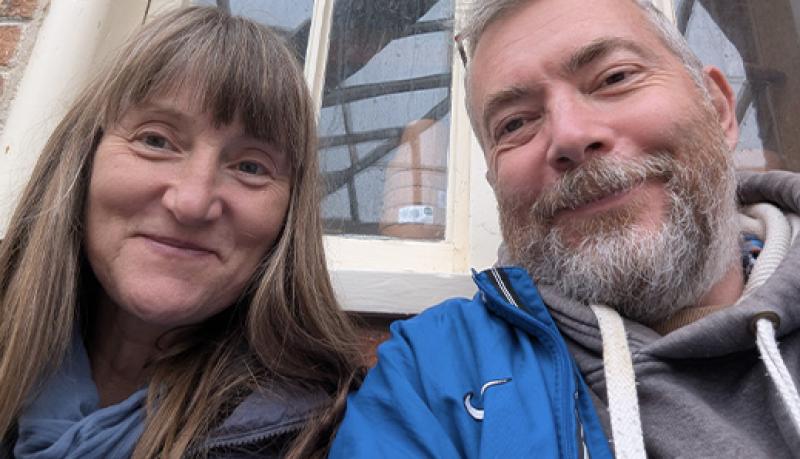
Ruth Harvey experienced an out-of-hospital cardiac arrest in July 2021 at the age of 50. At the time, Ruth was active and busy with family life, supporting her children, studying horse care, and working part-time at a local equestrian centre.
Ruth’s cardiac arrest happened while visiting her partner, Simon, in Salisbury. The pair had been out for a walk and were close to home when Ruth suddenly collapsed without warning. Simon initially thought she had fainted but quickly realised something was seriously wrong when she became rigid, developed agonal breathing, and had no pulse.
Drawing on previous first aid training, he immediately began CPR. A series of fortunate coincidences helped save Ruth’s life. A friend happened to cycle past and called 999, while another passer-by used the What3Words app to help emergency services locate them quickly. An ambulance that was nearby arrived within minutes. Ruth’s initial rhythm was pulseless electrical activity (PEA), meaning the defibrillator advised that no shock should be given. Paramedics continued CPR while searching for a possible underlying cause, but no cause was ever identified.
Ruth regained a pulse after around 25 minutes. She was taken to hospital in a critical condition, where she was admitted to intensive care, intubated, and sedated. Ruth later experienced memory loss, delirium, and cognitive difficulties caused by hypoxia during her cardiac arrest. She spent around three weeks in hospital before being discharged home.
Although Ruth is grateful for the care that saved her life, she says both she and her family struggled with the lack of information and ongoing support after discharge. She experienced fatigue, neurological symptoms, anxiety, and significant changes to her memory and concentration. Much of the support she eventually received, including psychological therapy and neurological rehabilitation, came only after persistent self-advocacy and searching for information independently.
Ruth later found support through Sudden Cardiac Arrest UK, Resuscitiation Council UK, Chain of Survival, and Headway, which helped her better understand the long-term impact of cardiac arrest survivorship.
Five years on, Ruth says cardiac arrest recovery remains an ongoing process, not simply a single medical event. She believes survivors and their families need a structured, long-term pathway of care that recognises both the physical and psychological impact of cardiac arrest. By sharing her story, Ruth hopes to improve awareness of sudden cardiac arrest.