
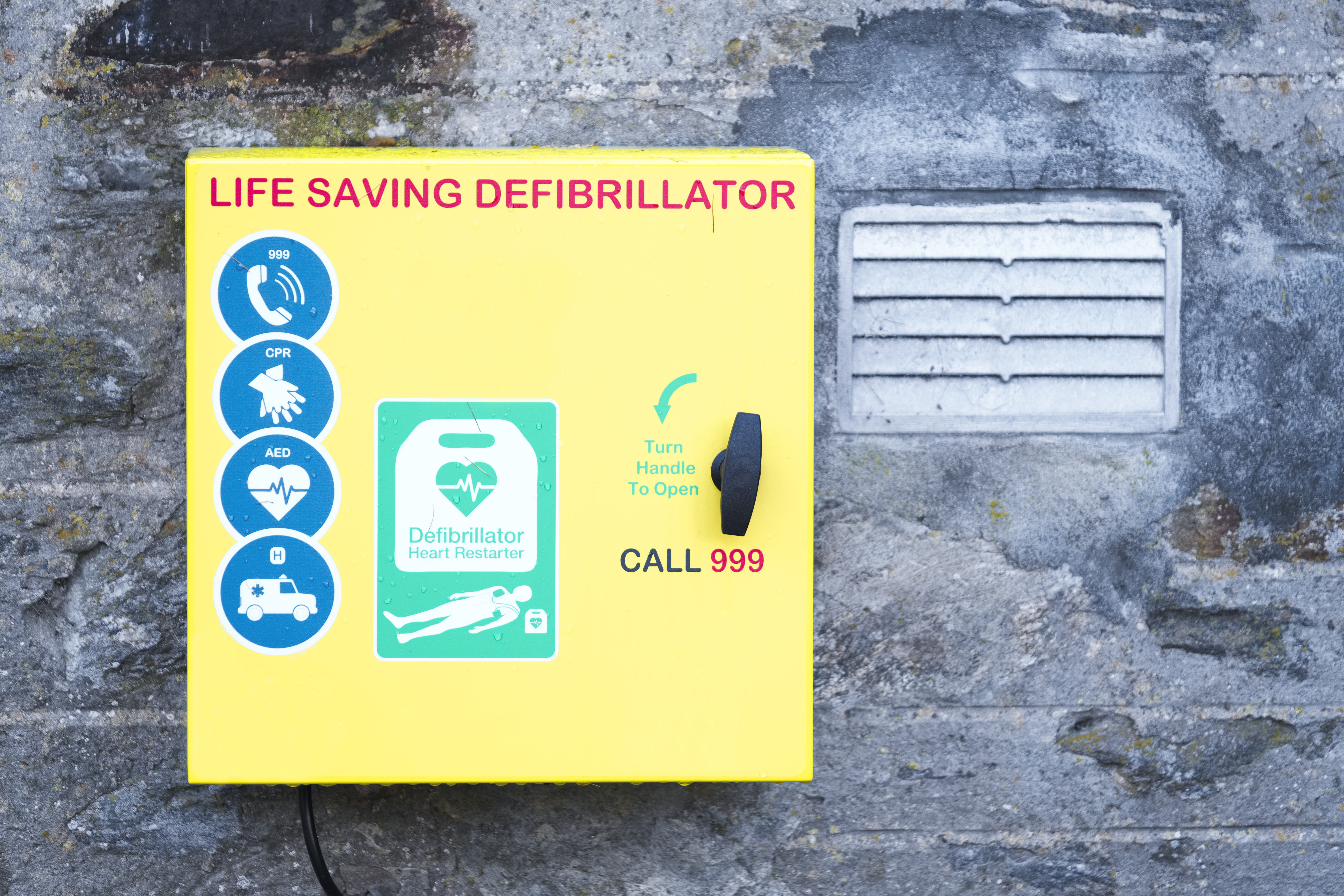
Automated external defibrillators (AEDs) play a vital role in improving survival from out‑of‑hospital cardiac arrest, where immediate CPR and rapid defibrillation are essential. Resuscitation Council UK (RCUK) has published a new policy briefing exploring the role of AEDs in vehicles and setting out our current position.
The briefing outlines why RCUK’s priority remains the widespread availability of public access defibrillators (PADs) in fixed, known locations registered on The Circuit, ensuring equitable access and seamless integration with emergency services. It also highlights recent progress made with the DVSA, with CPR and defibrillator awareness questions being introduced into the car and motorcycle theory test from early 2026 — a change that will equip around 2.4 million new drivers each year with essential lifesaving knowledge.
While some individuals, such as community responders or rural motorists, may choose to carry an AED in their vehicle, this remains a personal decision. The briefing sets out contexts where voluntary carriage may be helpful, alongside practical considerations including temperature sensitivity, accessibility, maintenance and registration on The Circuit.
Read the full policy briefing here.