
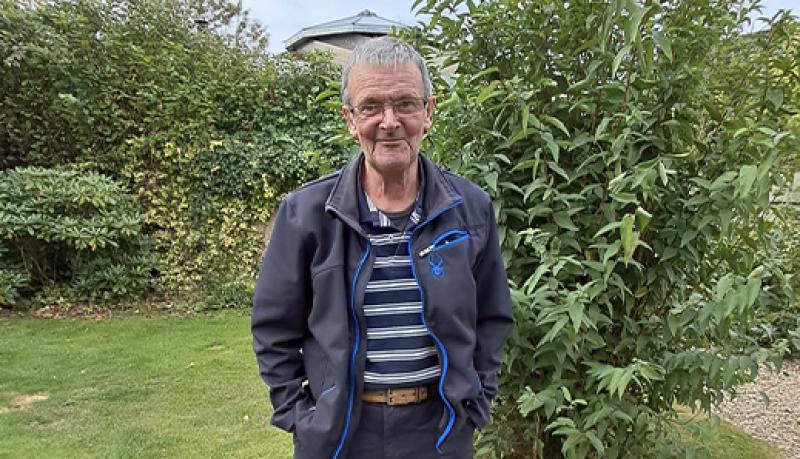
MacLean MacLeod, from Forres in Morayshire, experienced a cardiac arrest in April 2022. Prior to this, he was fit and active, regularly taking part in competitive coastal rowing with the Findhorn Coastal Rowing Club.
He had represented the club in national and international events, including the Skiffie World Championships, and maintained his fitness through regular high-intensity training and gym sessions. On the day of his cardiac arrest, MacLean had spent the day gardening before heading to Findhorn for a training row. He had felt well throughout the day, but shortly after stepping out of the boat at the end of the session, he collapsed on the shoreline.
Thankfully, one of his fellow crew members was a trained first responder and immediately recognised that he was in cardiac arrest. She and another crew member started CPR straight away while others went to get help and locate a defibrillator. MacLean received CPR for more than 20 minutes before being shocked three times with a defibrillator. He regained a pulse just as the ambulance arrived.
He was taken to Aberdeen Royal Infirmary, where he stayed for nearly three weeks and underwent treatment including the fitting of three stents.
While MacLean speaks positively about the care he received in hospital, he says the support available after discharge was lacking. Despite being told further tests and follow-up care would be arranged, months passed without communication or rehabilitation support. It was only after contacting his Members of the Scottish Parliament that further appointments and tests were organised.
Reflecting on his experience, MacLean believes that clearer communication and a structured pathway of care following cardiac arrest would have made a significant difference to both him and his family. After leaving hospital, he felt isolated and unsure where to turn for advice and support.
MacLean later connected with Keirans Legacy, the charity that supplied the defibrillator used to save his life, as well as Resuscitation Council UK and Sudden Cardiac Arrest UK. Through these organisations, he found information, peer support, and reassurance from people who understood the challenges faced by cardiac arrest survivors.