
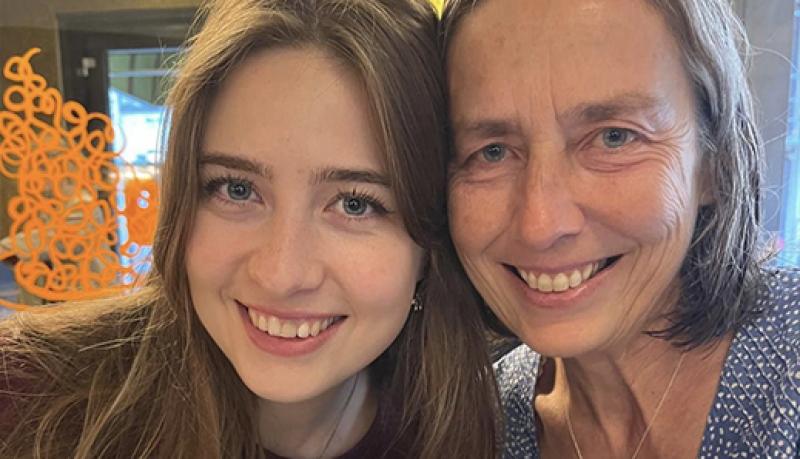
Josephine Wren’s daughter, Siobhan, experienced an out-of-hospital cardiac arrest at the age of 20 while studying abroad in Madison, Wisconsin. Previously fit and healthy, Siobhan collapsed suddenly while out shopping with university friends in the nearby city of Middleton.
At first, her friends believed she had fainted. One of them went to get water and spotted a passing police patrol car, stopping to ask for help. The police officer initially thought Siobhan might be having a seizure, but quickly began CPR when it became clear she had experienced a cardiac arrest.
A defibrillator was not available in the patrol car, but first responders arrived shortly afterwards and continued resuscitation efforts, which led to her heart beating on its own again. Siobhan was intubated at the scene and later suffered a further cardiac arrest in hospital.
Josephine and her husband travelled urgently to the United States while Siobhan remained in a coma. When sedation was reduced, doctors warned that she might have permanent brain damage. Josephine describes this period as overwhelming and frightening, with very little emotional support available for families coping with the shock of sudden cardiac arrest. Siobhan underwent surgery and was fitted with an implantable cardioverter defibrillator (ICD).
However, when she was discharged from intensive care just days later, the family still had no explanation for why the cardiac arrest had happened and little understanding of how the device worked or how to support her recovery.
One of the most meaningful moments during this time came when the first responders who had treated Siobhan reached out to the family. The police officer who attended the incident left his contact details at the hospital, and members of the volunteer response team later met with the family to offer support and reassurance. Josephine says this contact made a significant difference to them during an extremely isolating experience.
After returning to the UK, Siobhan experienced further medical complications, including additional shocks delivered by her ICD and another collapse in Manchester, where she spent almost a month in hospital while doctors worked to stabilise her condition. Despite this, Josephine says there was still very limited guidance or support available for patients and families living with the long-term impact of cardiac arrest.
Eventually, Josephine found support through Sudden Cardiac Arrest UK and counselling through Sudden Arrhythmic Death Syndrome UK. Reflecting on her family’s experience, Josephine believes survivors and co-survivors need clearer pathways of care after cardiac arrest, including psychological support, practical information, and ongoing follow-up care.